

Turning AI Into Value Across Your Portfolio
How private equity firms can improve operations, create new revenue, and find their first AI win.
AI Is Advancing Faster Than Businesses Can Adapt
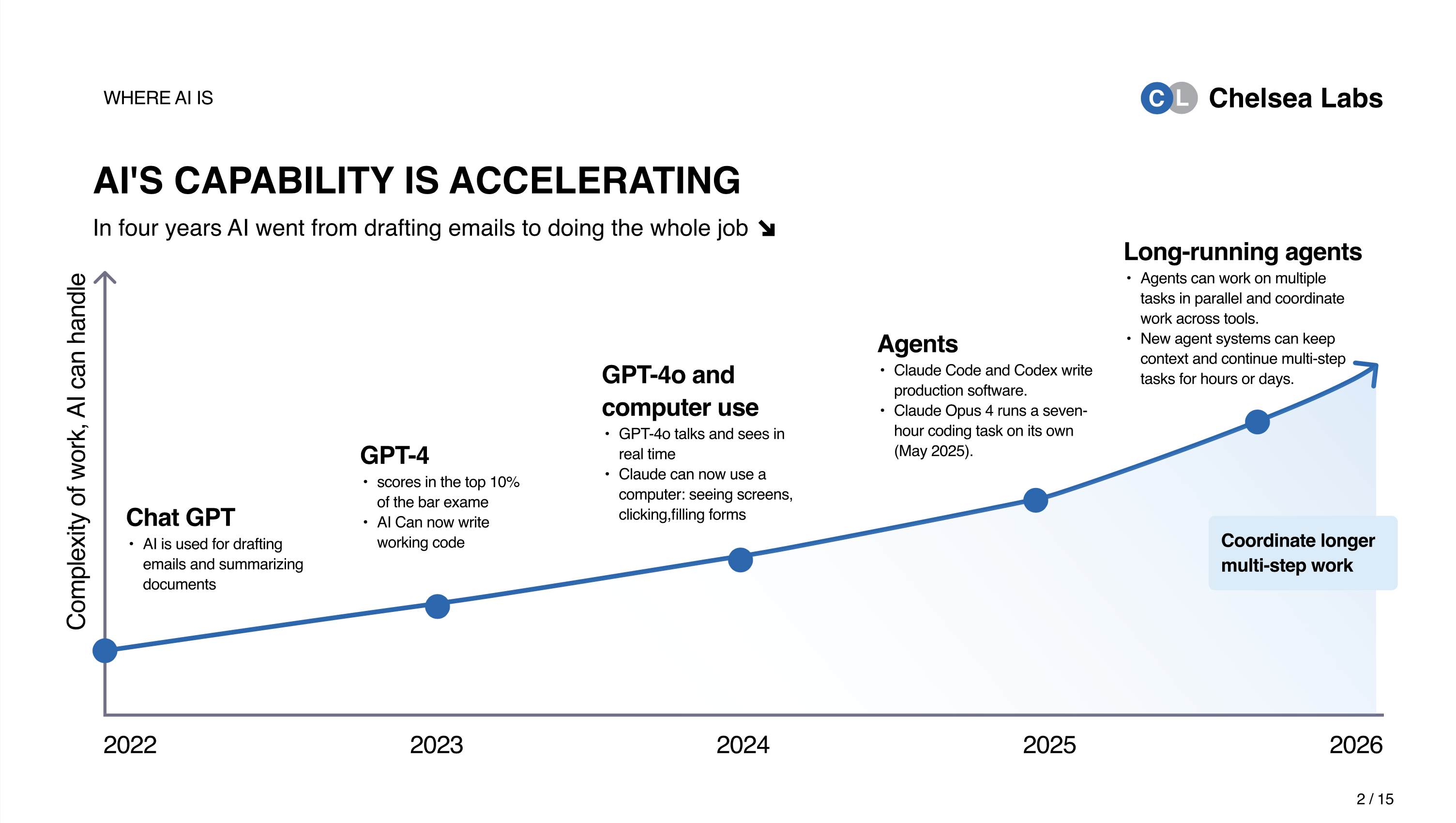
Let’s address the elephant in the room: AI’s capabilities are expanding rapidly.
A few years ago, we used AI for parts of a job, like drafting emails or summarizing documents. Today, AI systems can complete entire workflows, from receiving information to taking action across systems.
This expands what businesses can automate and improve across their organization. The question many PE firms are focusing on is where these capabilities can product measureable business value.
Adoption Takes More Than Access
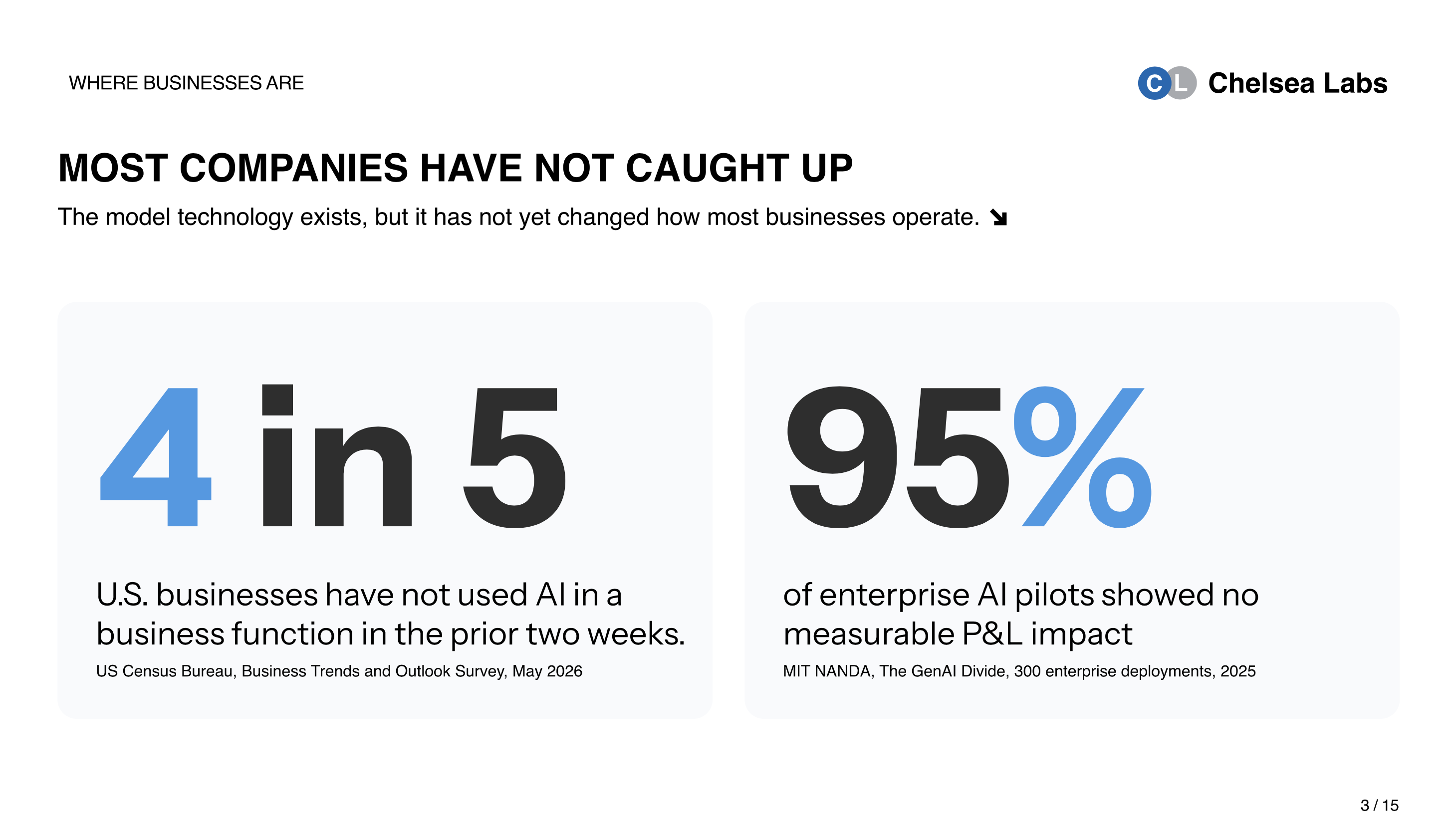
Using AI for individual tasks is different from integrating it into business operations.
Implementation requires understanding workflows, connecting systems and data, testing reliability, and measuring results. It also requires clear ownership and adoption on how the teams actually work.
These responsibilities often fall to people already managing day-to-day operations.
As AI’s capabilities advance, businesses need the capacity to evaluate and implement them effectively.
Businesses Need Help Putting AI to Work
Most leadership teams already have a full-time job: running the business.
Keeping pace with AI requires time and expertise to evaluate new capabilities, identify valuable opportunities, and build solutions that work in day-to-day operations.
For teams already managing growth, customers, and delivery, that can become an impossible workload.
Meanwhile, employees continue copying information between systems, updating spreadsheets, chasing approvals, and assembling reports—the very work AI could help reduce.
Businesses need dedicated support to turn AI’s progress into practical improvements.
Why This Matters to Private Equity
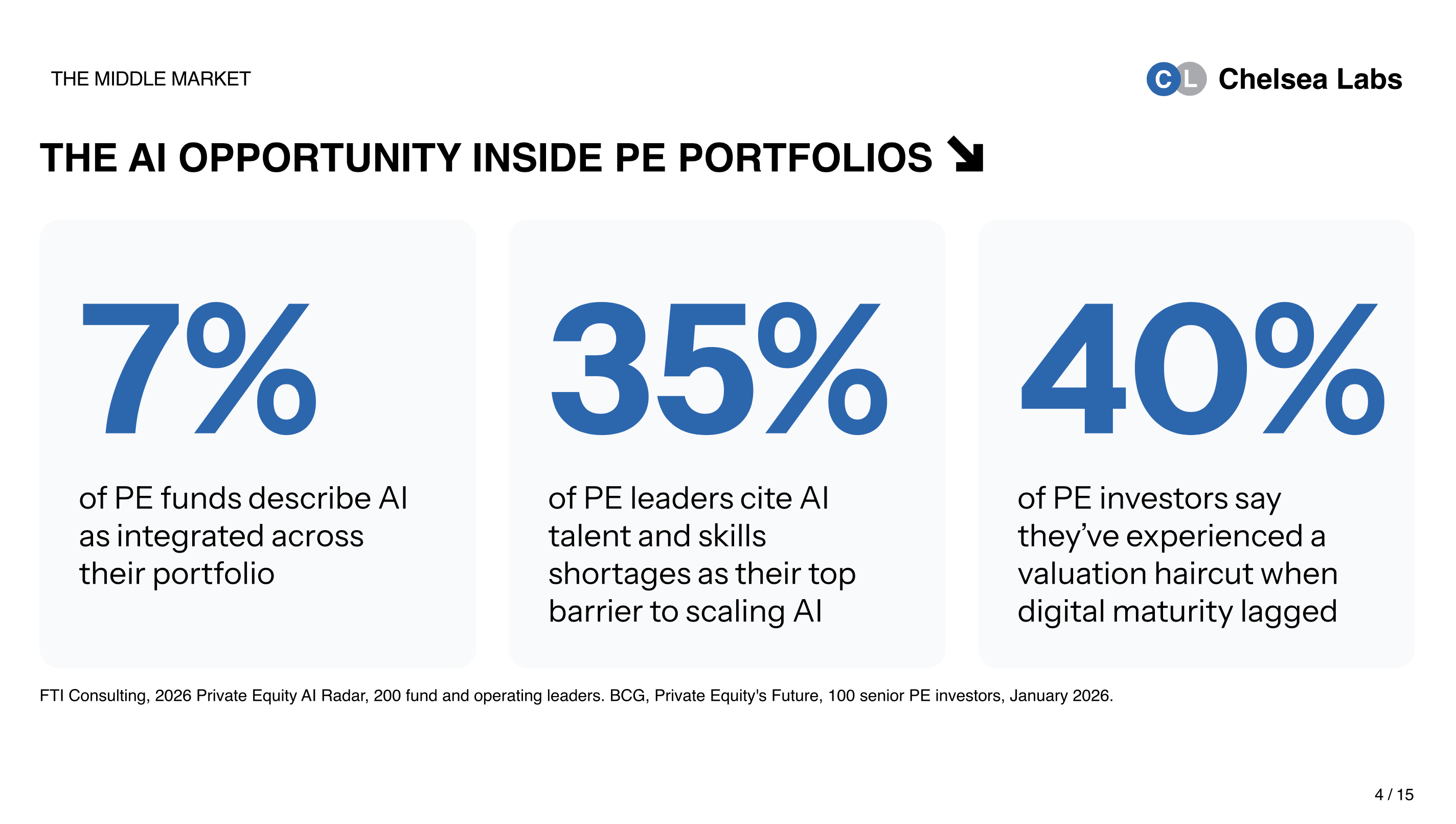
Private equity firms invest in making companies more valuable through revenue growth, stronger margins, acquisitions, and better operations.
AI can support each of those goals.
Reducing administrative work can help a company handle more volume. Improving sales follow-up can help convert more demand. Connecting fragmented systems can make acquisitions easier to integrate.
For PE firms, these opportunities can repeat across the portfolio.
An improvement proven in one company can become a starting point for others.
Some of the largest investment firms are already building implementation capabilities. Blackstone, Hellman & Friedman, and Goldman Sachs partnered with Anthropic on an enterprise AI services firm. TPG, Advent, Bain Capital, and Brookfield backed OpenAI’s Deployment Company. Thoma Bravo partnered with Google Cloud to accelerate AI transformation across its software portfolio.
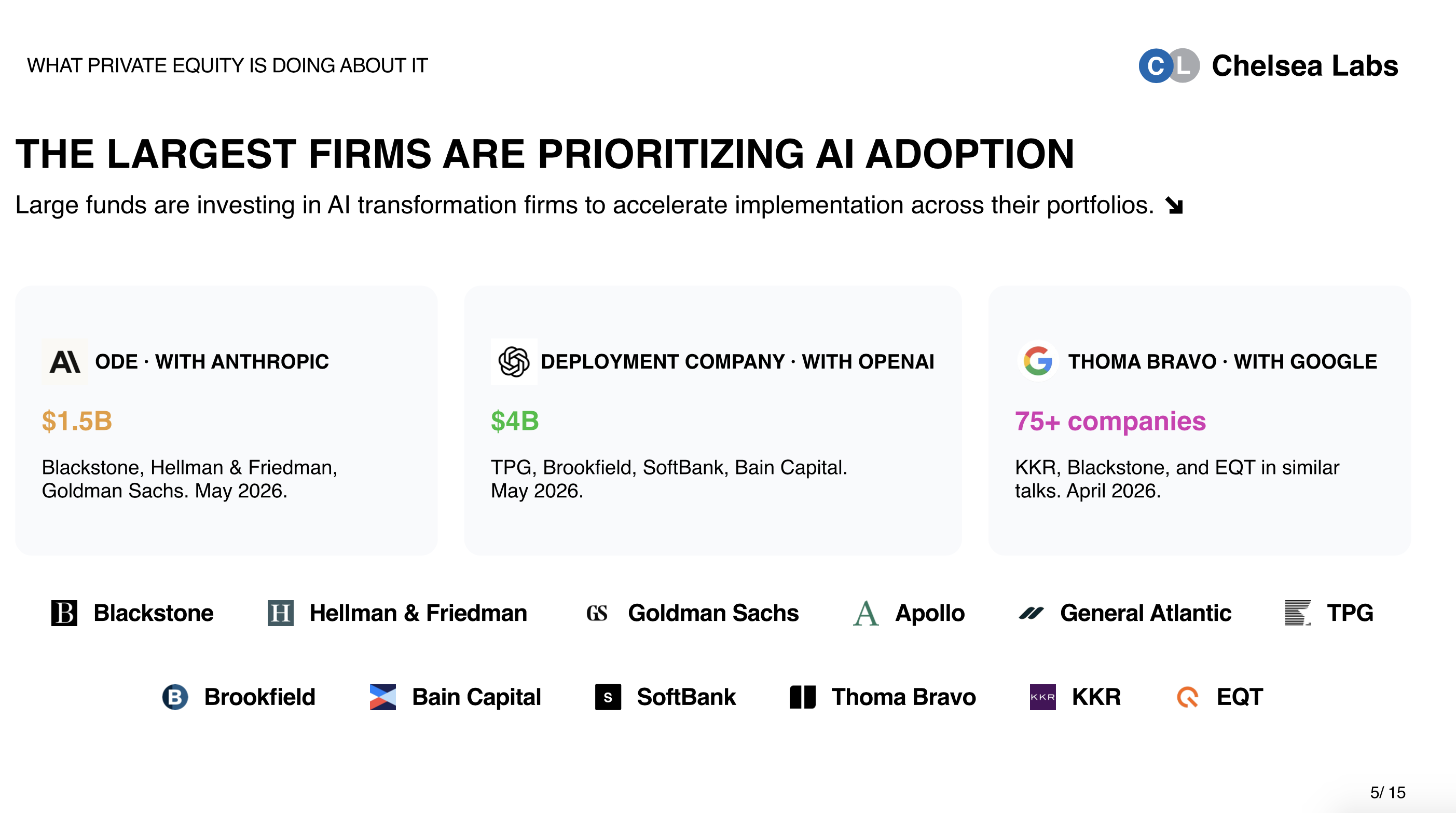
These investments point toward a practical priority: helping portfolio companies turn AI capability into measurable business value.
How Chelsea Labs Helps
We start by understanding how the business operates.
Across sales, operations, hiring, and finance, we map how work gets done, where information moves, and where the team gets stuck.
Then we focus on two outcomes:
- Optimize what exists: Automate manual work, connect systems, reduce errors, and improve delivery.
- Grow new revenue: Strengthen sales channels, introduce new services, and turn expertise into products.
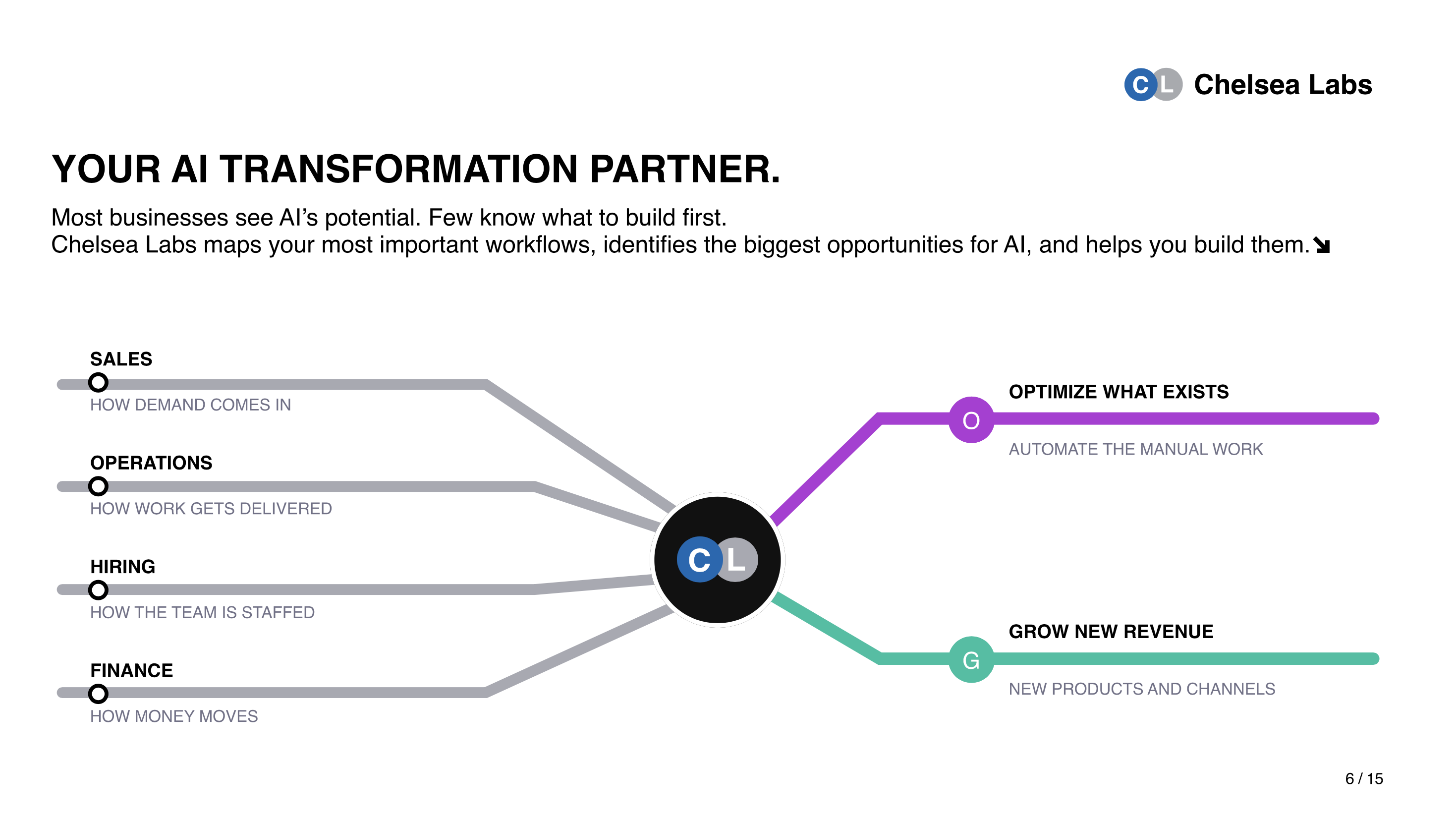
Our role is to connect the business opportunity with the design and engineering needed to deliver it.
Start With a Two-Week AI Audit
The first challenge is deciding what to build.
Our AI Audit gives leadership a clear starting point:
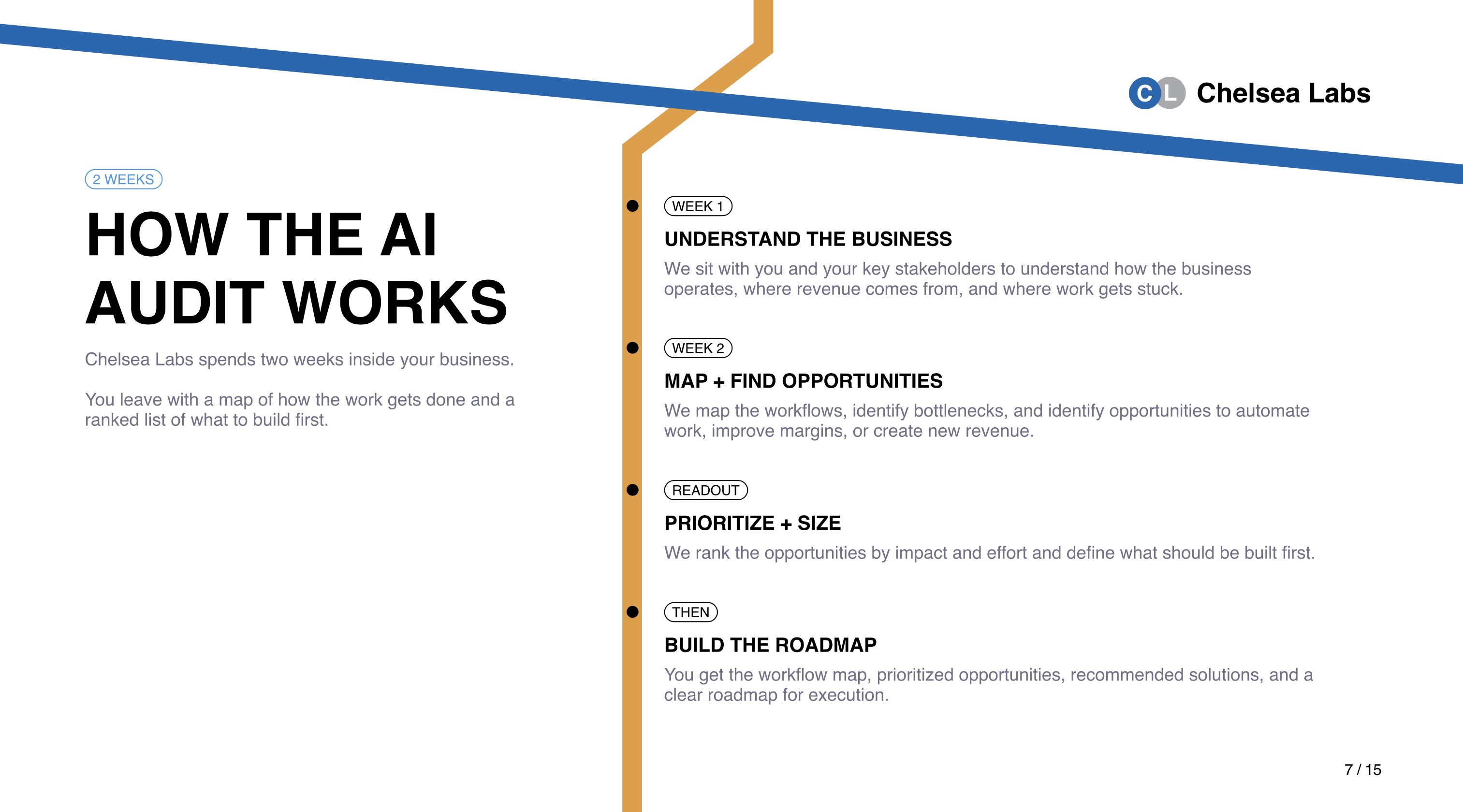
Week 1 — Understand the business.
We speak with leadership and the people doing the work to understand revenue, systems, processes, and bottlenecks.
Week 2 — Map and prioritize.
We identify opportunities, assess their potential impact and implementation effort, and recommend what to build first.
You leave with a workflow map, prioritized opportunities, recommended solutions, and an execution roadmap.
Before implementation, we define how success will be measured: time saved, errors reduced, capacity added, or revenue generated.
What This Looks Like in Practice
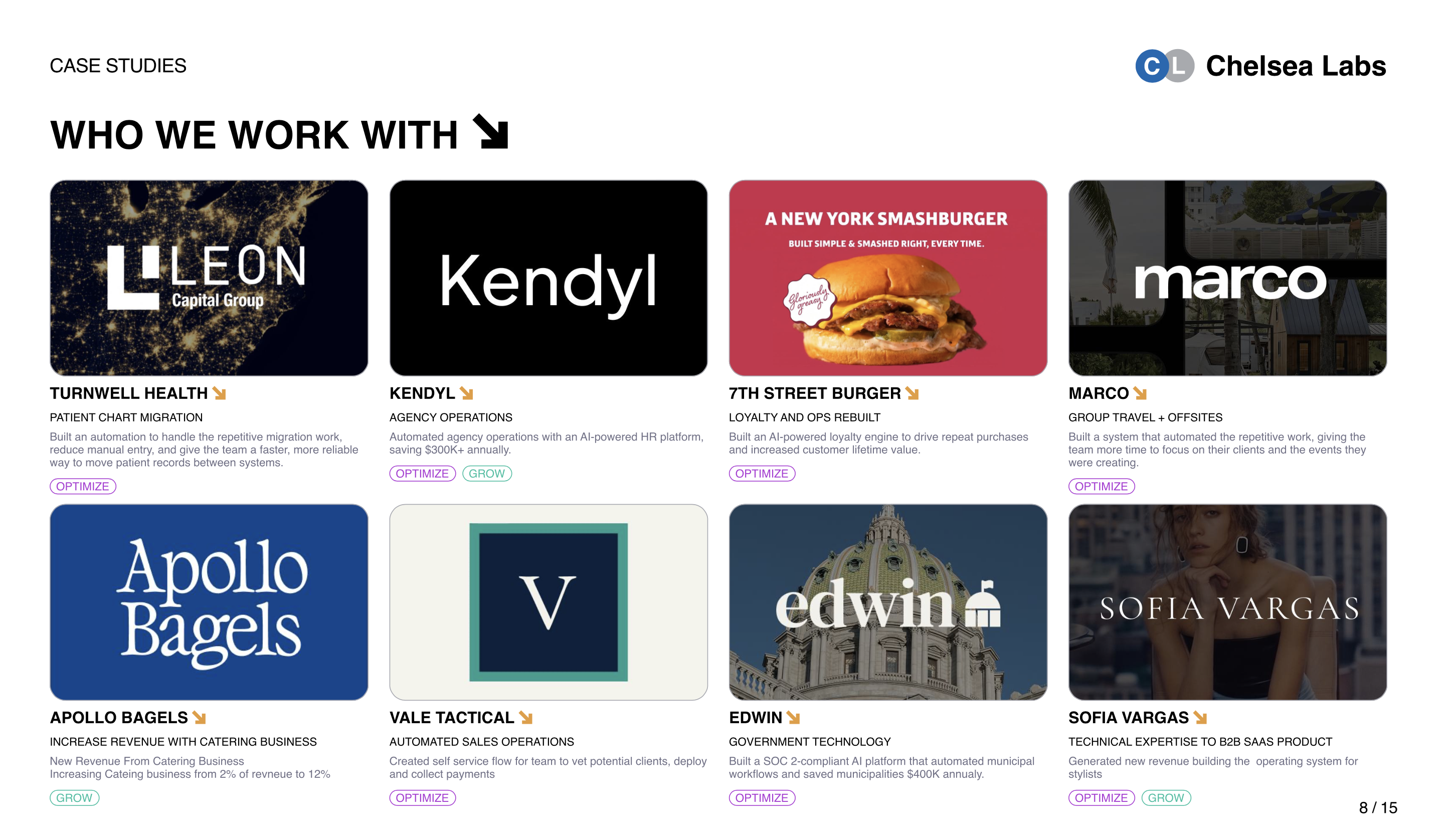
Turnwell Health: We built automation to move patient chart information from KIPU into Valant—a repetitive workflow involving approximately 200–300 charts per week—with human review for exceptions.
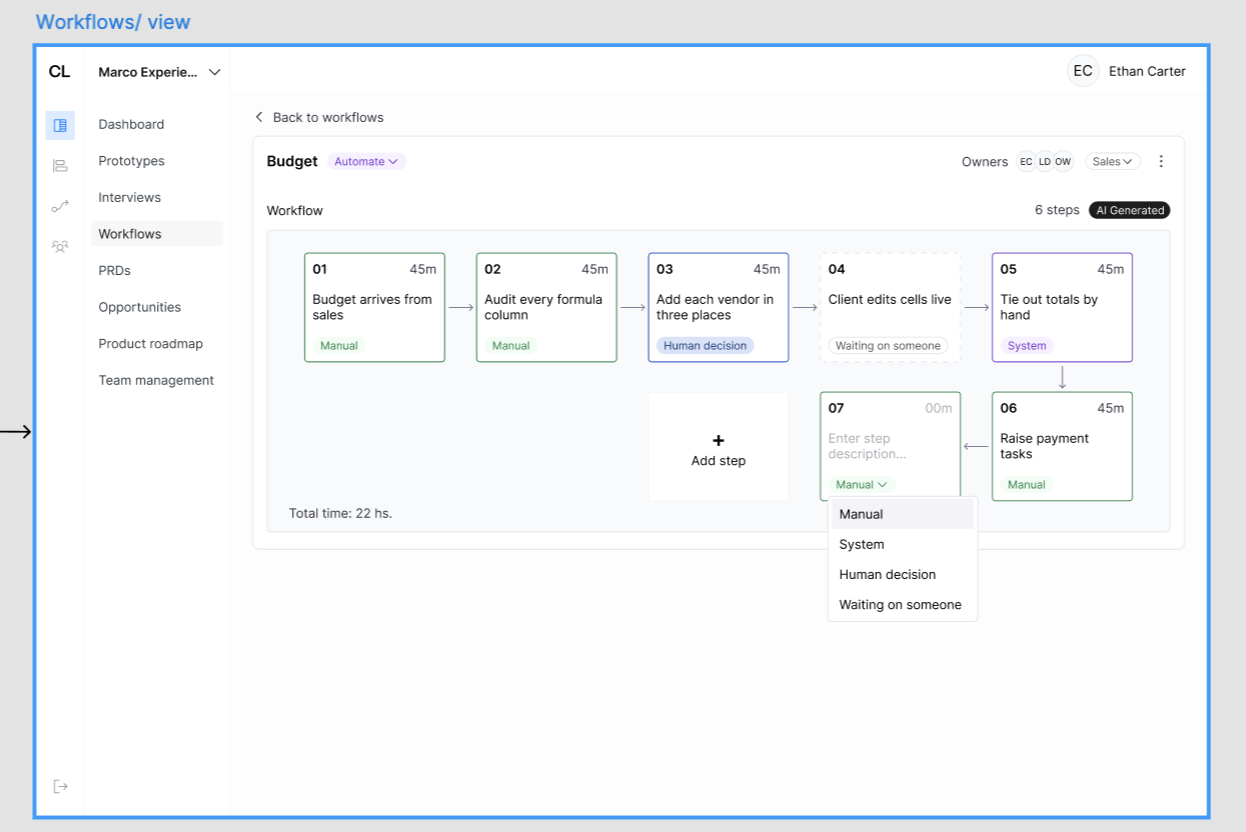
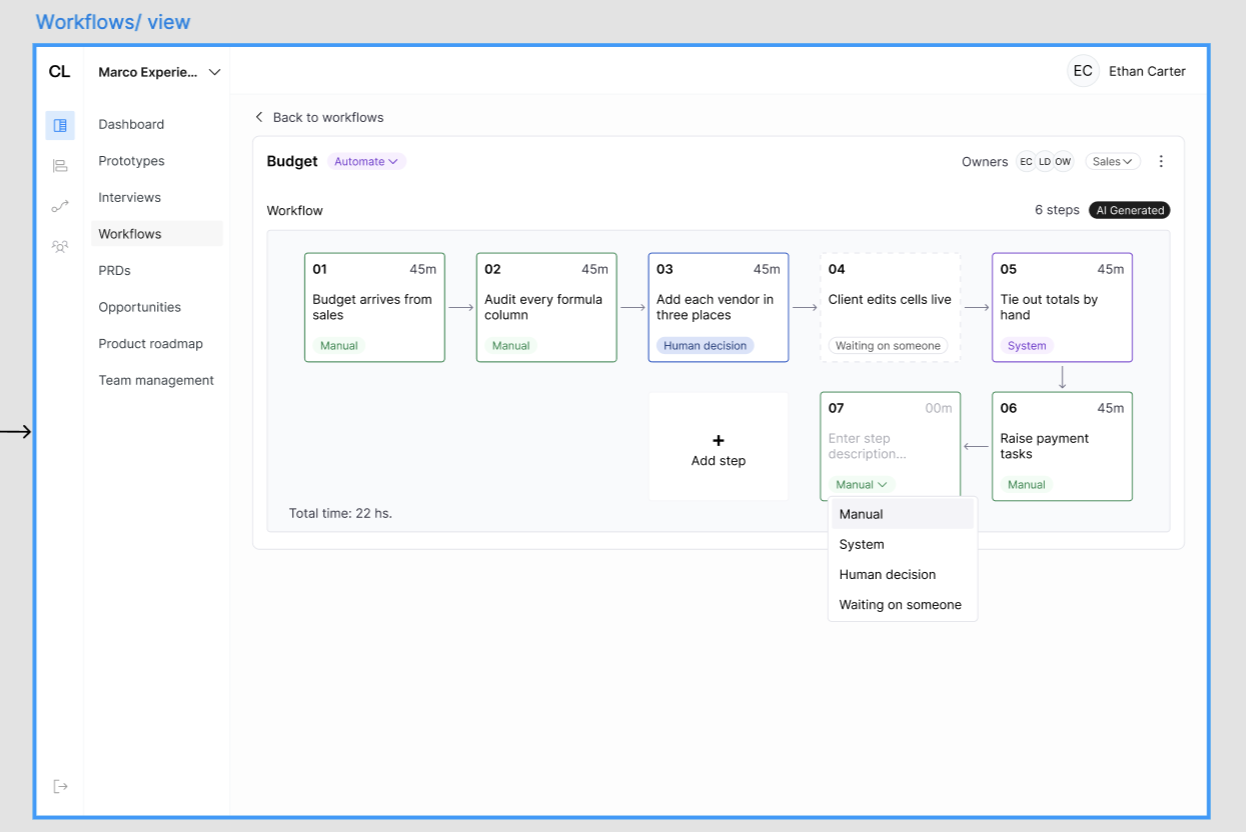
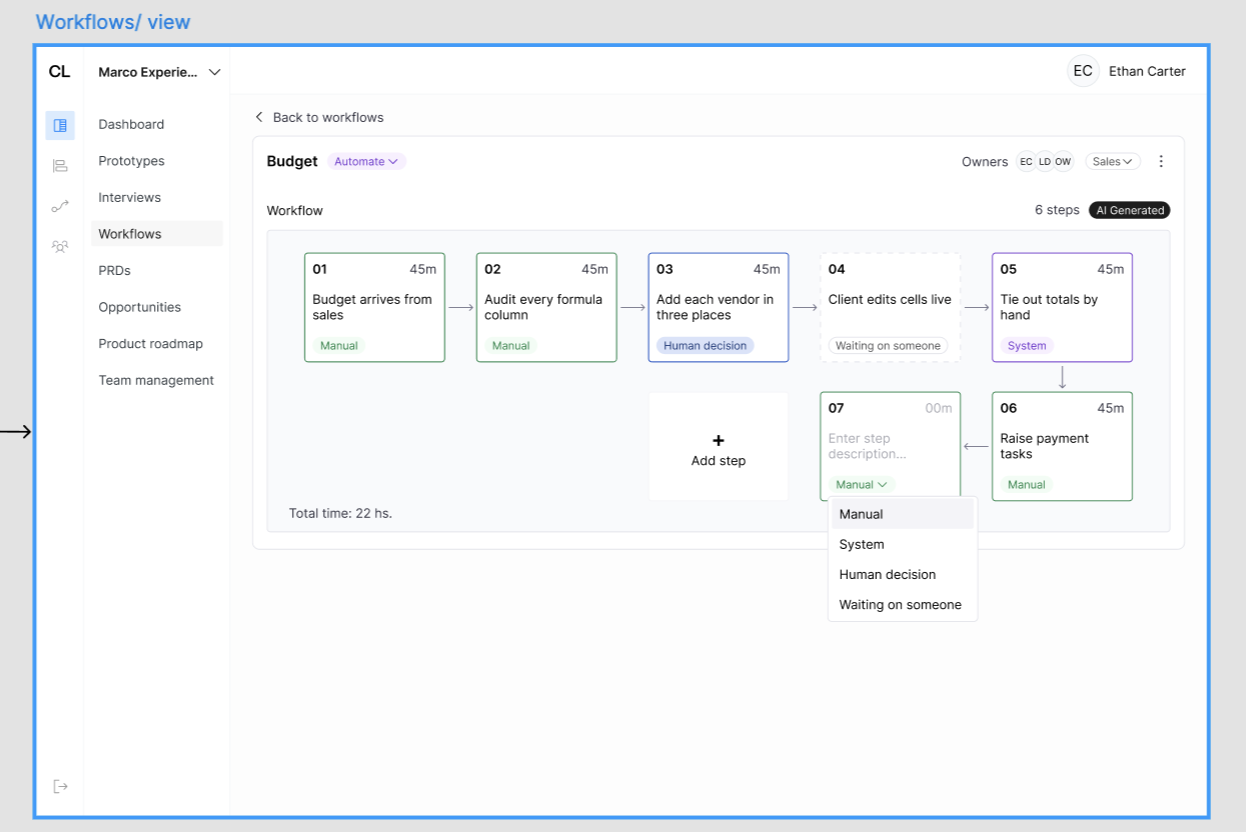
Marco Experiences: Our work connects budgets, guests, vendors, and client decisions in an event operating system, creating a foundation for reducing manual coordination.
Apollo Bagels and 7th Street Burger: Our restaurant work spans operational reporting, loyalty, and catering opportunities, connecting efficiency with growth.
Each engagement begins with a concrete workflow and a business reason to improve it.
Strategy Through Deployment
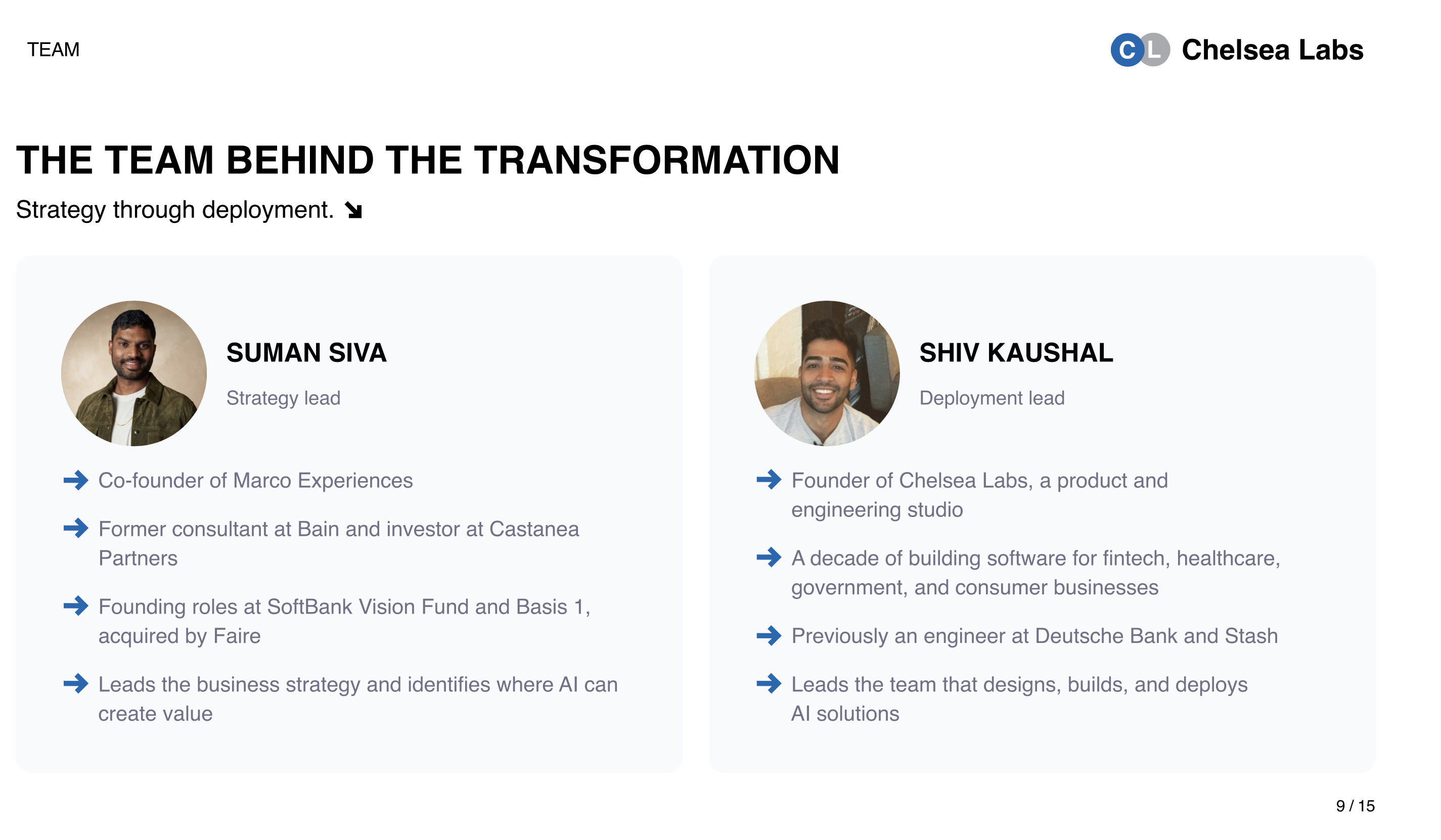
Suman Siva leads strategy, drawing on his experience as a Bain consultant, Castanea Partners investor, and co-founder of Marco Experiences.
Shiv Kaushal leads deployment as the founder of Chelsea Labs and a former engineer at Deutsche Bank and Stash.
Together with our design and engineering team, we carry the work from identifying an opportunity through building and deploying the solution.
Find the First AI Win in Your Portfolio
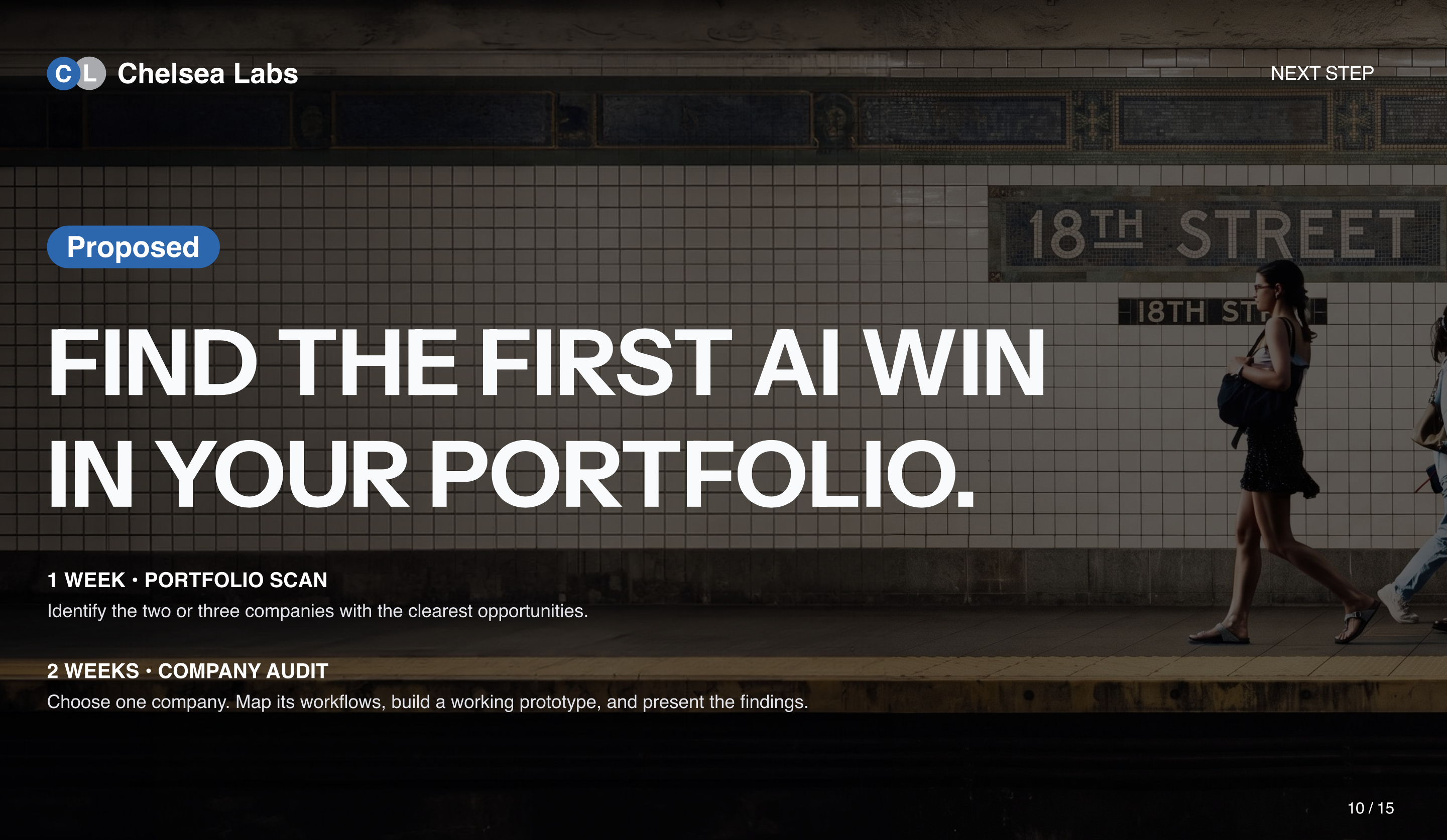
Start with a one-week portfolio scan to identify two or three companies with promising opportunities.
Then choose one for a two-week company audit to map its workflows, develop a focused prototype, and present a plan for implementation.
Have a portfolio company in mind? Let’s schedule an introductory conversation to explore where AI could create value.