

What Is a Forward Deployed Engineer?
How forward deployed engineers help businesses put AI to work and turn its capabilities into measurable results.

Every Company Can Now Buy Intelligence
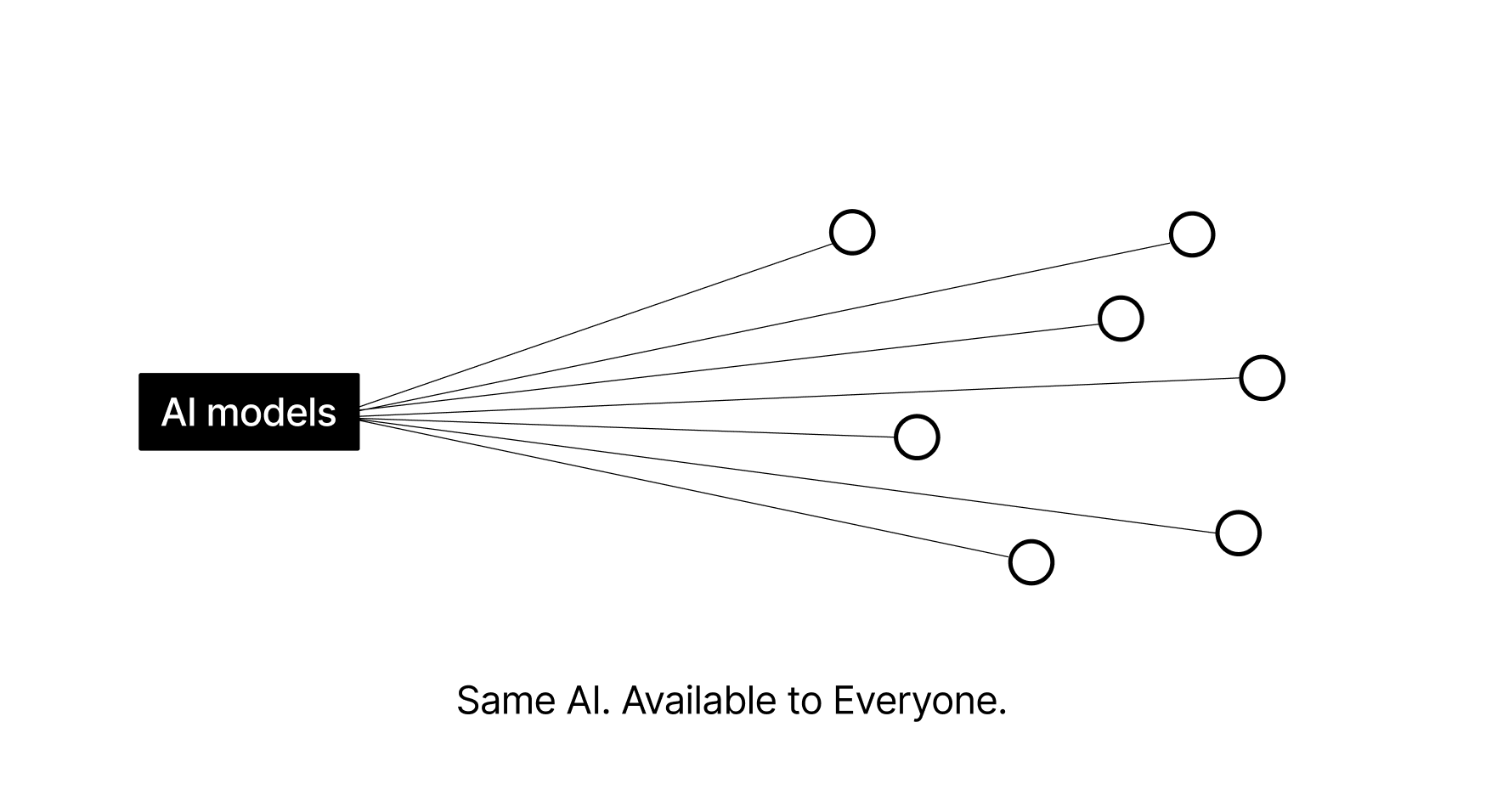
Your business can now buy AI tools that review documents, answer questions, and take action in software. Your competitors can buy many of those same tools.
For business leaders, the opportunity is practical: help employees spend less time on paperwork, respond to customers faster, and handle more work as the business grows.
But access alone doesn’t deliver those results. Someone still needs to decide where AI can help and connect it to the way your team works.
If everyone can buy intelligence, where does the competitive advantage come from?
The Advantage Comes From Deployment
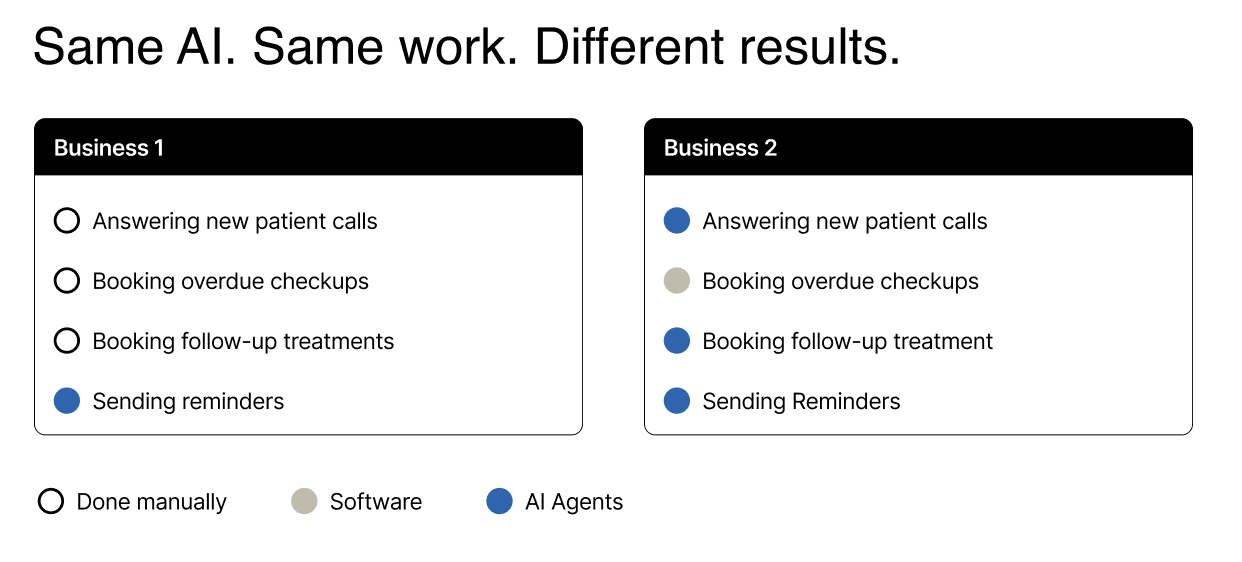
Consider two healthcare companies using the same AI model. Both need their front desk teams to respond to patient inquiries, schedule appointments, and follow up with people who haven’t booked.
The first gives employees access to a chatbot. It helps them write replies, but they still enter patient details into the scheduling system, check availability, and remember who needs a follow-up.
The second connects AI to its patient intake and scheduling systems. When an inquiry arrives, the system records the details, checks available appointments, and prepares a reply for a team member to approve. It also tracks patients waiting to book and prepares follow-ups.
Both companies have the same AI and the same work to get done. The second has built it into the workflow, helping employees spend less time on paperwork and patients get scheduled sooner.
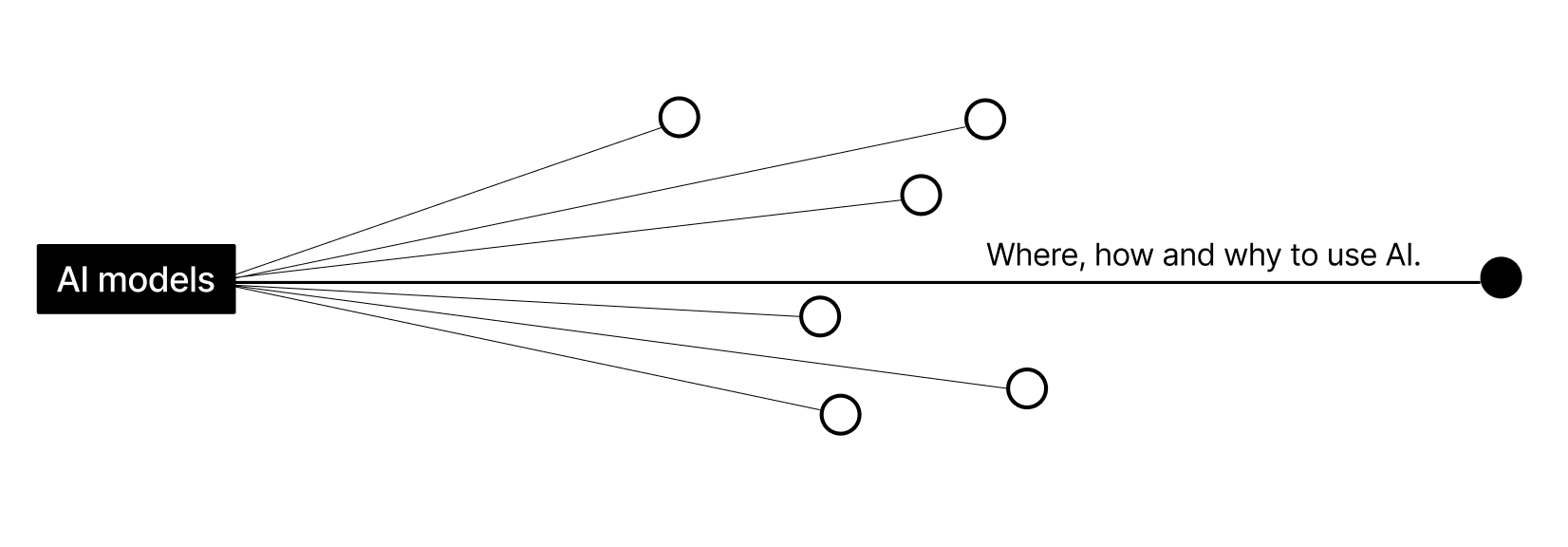
The advantage comes from where, how, and why a business uses AI.
Making this happen takes someone who understands how your business works and has the engineering skills to build the solution.
That person is a forward deployed engineer.
Someone Has to Decide Where Intelligence Belongs
A forward deployed engineer, or FDE, works directly with your team to understand how work gets done and build software that improves it.
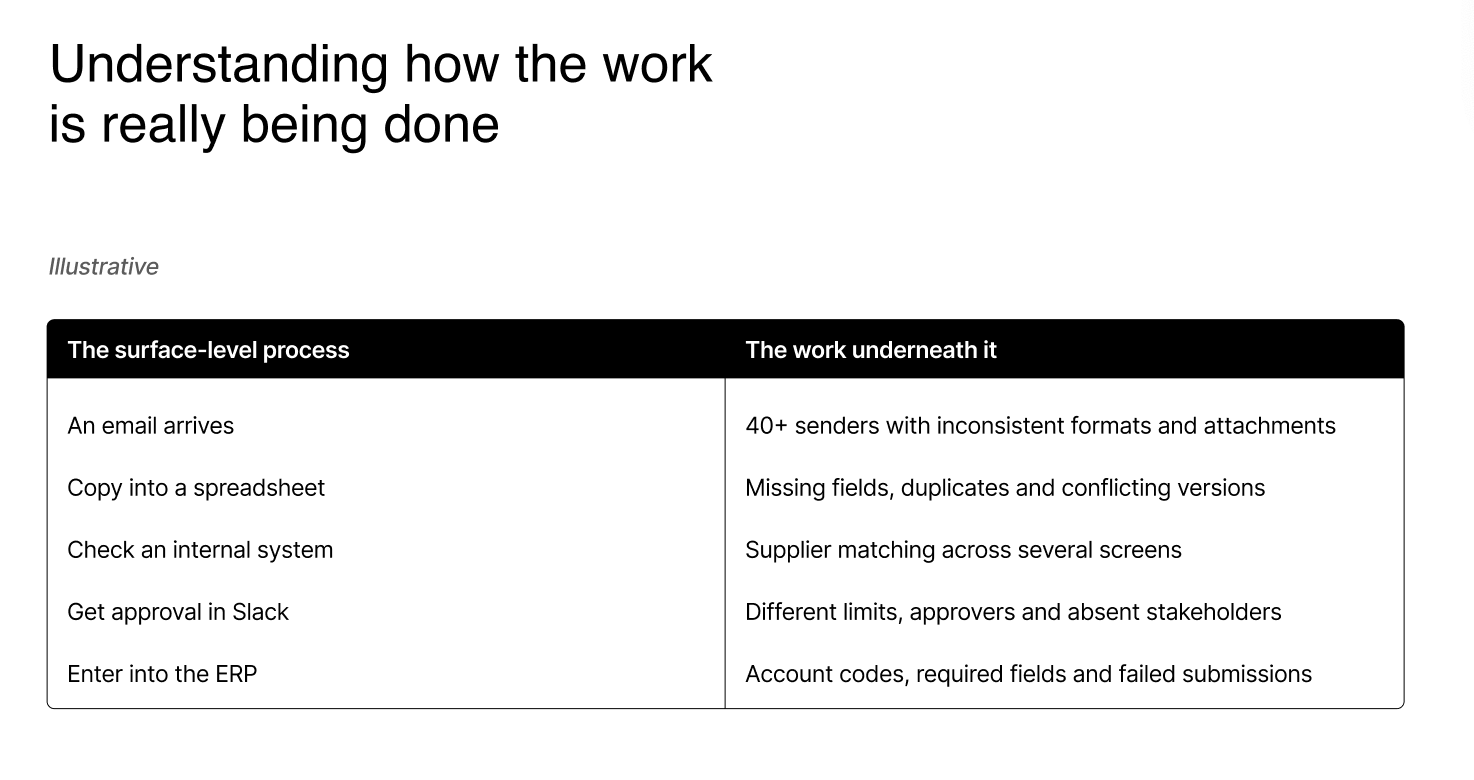
They start by learning how your business operates. They spend time with employees, follow the steps of their work, and learn the systems they use. This helps them see where work slows down and where people spend time on repetitive tasks.
At a healthcare company, this could mean sitting with the front desk team to understand how a patient inquiry becomes a booked appointment. They also learn how the team handles missing information, unavailable providers, and patients who need extra help.
From there, the FDE decides what to build. Some steps may benefit from AI. Others may only need a simple connection between systems. Decisions that require human judgment stay with your team.
The FDE then builds, tests, and deploys the solution. They work with employees to improve it based on daily use and measure whether it saves time or improves results.
Two healthcare companies may offer the same services but use different systems and follow different processes. The FDE builds around those details so the solution fits the business.
Their job is to turn what AI can do into something your team can use.
The Role Combines Business and Engineering Judgment
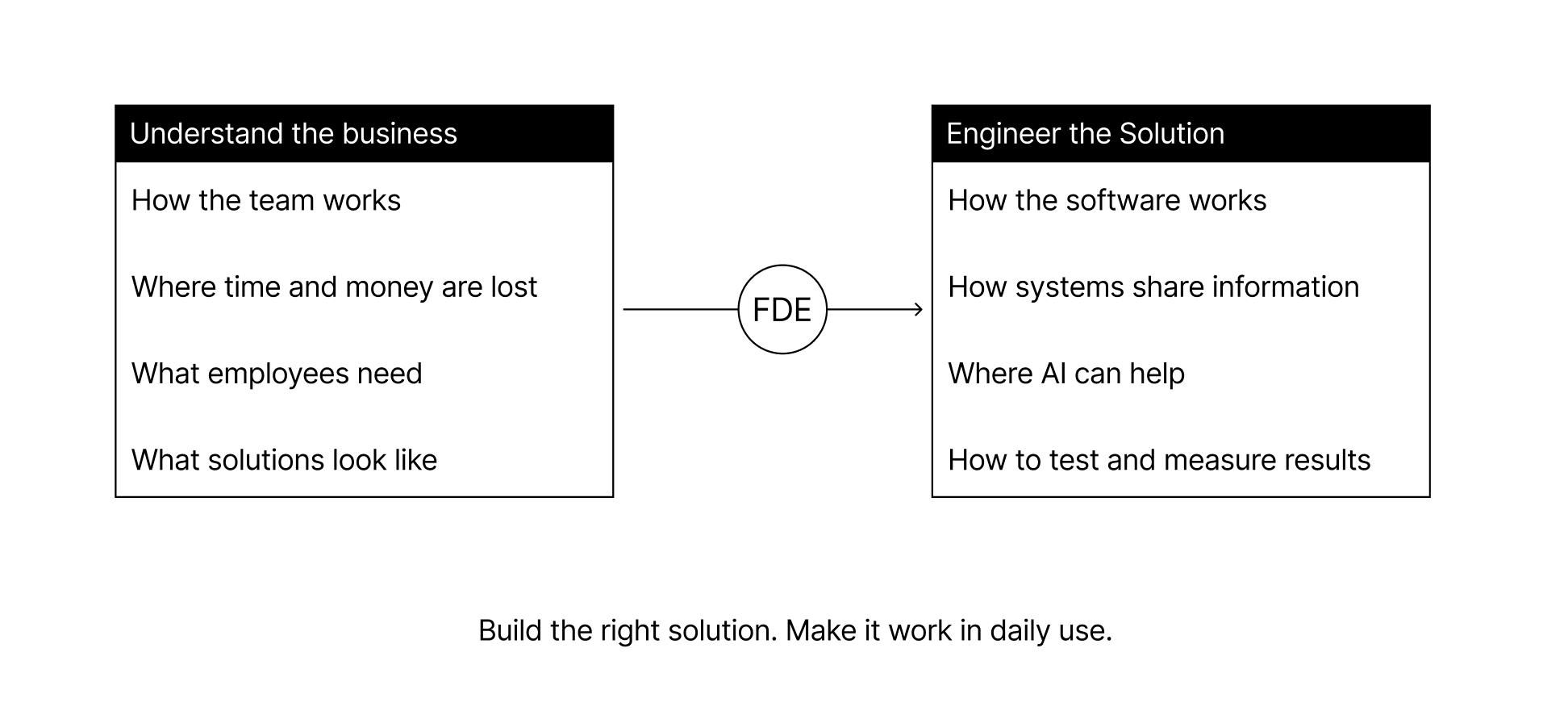
An FDE needs to understand both how a business operates and how to build the technology that supports it.
On the business side, they need to understand what a problem costs, how it affects employees and customers, and which improvements would make a meaningful difference.
On the engineering side, they need to decide how systems connect, where AI can help, and how to make the software reliable.
For example, a healthcare company may want to book patients faster. But the right solution depends on what causes the delay.
If employees spend time copying patient details, connecting systems may help. If requests arrive with missing information, AI can help identify what’s missing and prepare a follow-up. If staff are waiting for approval, the process itself may need to change.
The FDE connects these business needs to technical decisions. They choose a solution that addresses the cause of the problem and fits how the team works.
Business judgment helps them choose what is worth building. Engineering judgment helps them make it work.
From Understanding the Work to Putting AI Into Use
An FDE takes a solution from the first conversation through to daily use. The work starts with understanding the problem, then moves into building, testing, and deployment.
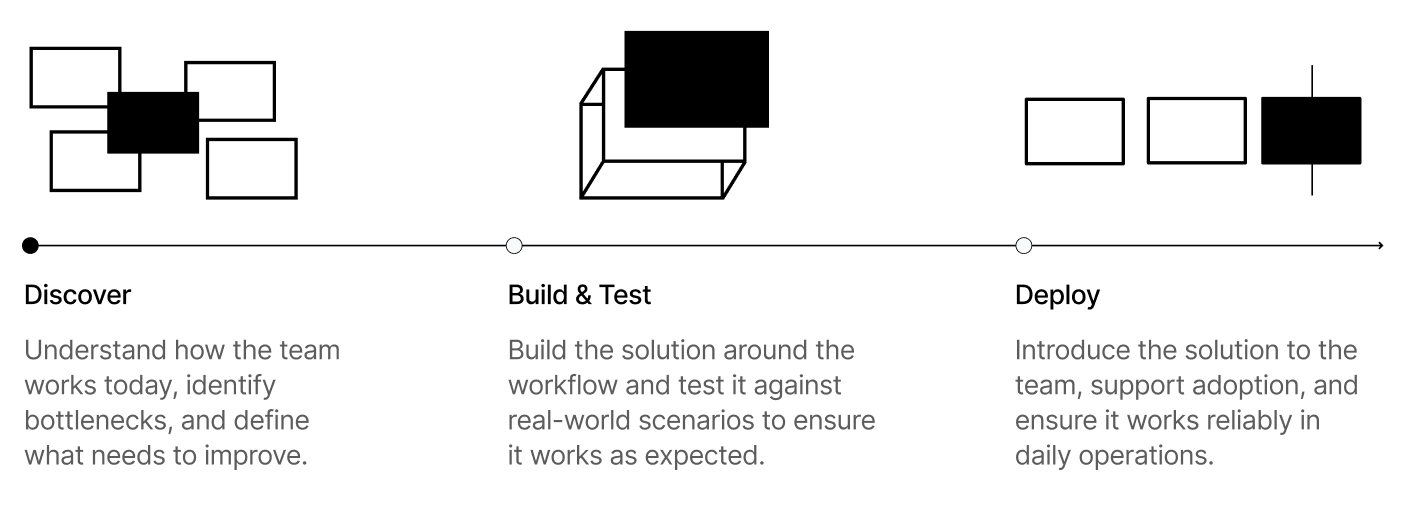
Discover
The FDE sits with employees and follows real examples of their work. They look at the usual steps and the situations that need extra attention.
At a healthcare company, this might mean following patient inquiries from the moment they arrive through to a booked appointment. The FDE identifies where requests get delayed and measures how much time the team spends handling them.
This gives the business a starting point for deciding what to improve and measuring whether the solution helps.
Build & Test
Next, the FDE builds the solution around the workflow. Software handles predictable steps, AI helps interpret information and prepare responses, and employees review decisions that need their judgment.
Before launch, the FDE tests the system with real examples. These include complete requests, missing details, duplicate inquiries, and unavailable appointments.
These tests are often called evaluations, or evals. They provide evidence that the system follows the business’s rules and sends situations it cannot handle to the right person.
Deploy
The FDE introduces the solution to a small group of employees. They help the team use it, review the results, and resolve problems before expanding its use.
Employees need to know what the system handles, what they need to review, and who to contact when something goes wrong.
The goal is working software that your team can rely on in daily operations.
The Work Continues After Launch
Once employees start using the system, they will encounter situations that did not appear during testing. Business rules may change. A scheduling tool may be updated. The team may find a better way to handle a request.
The FDE stays involved to monitor performance, resolve problems, and improve the system. New situations become test cases, helping the team check that future changes work as intended.
They also measure whether the solution delivers the expected benefit.
For the healthcare company, that could mean tracking:
- How quickly patients receive a response.
- How much staff time each inquiry requires.
- How many inquiries become booked appointments.
- How often employees need to correct the system.
These results are compared with the original workflow. Operating costs are tracked alongside them so the business can see whether the improvement is worth the investment
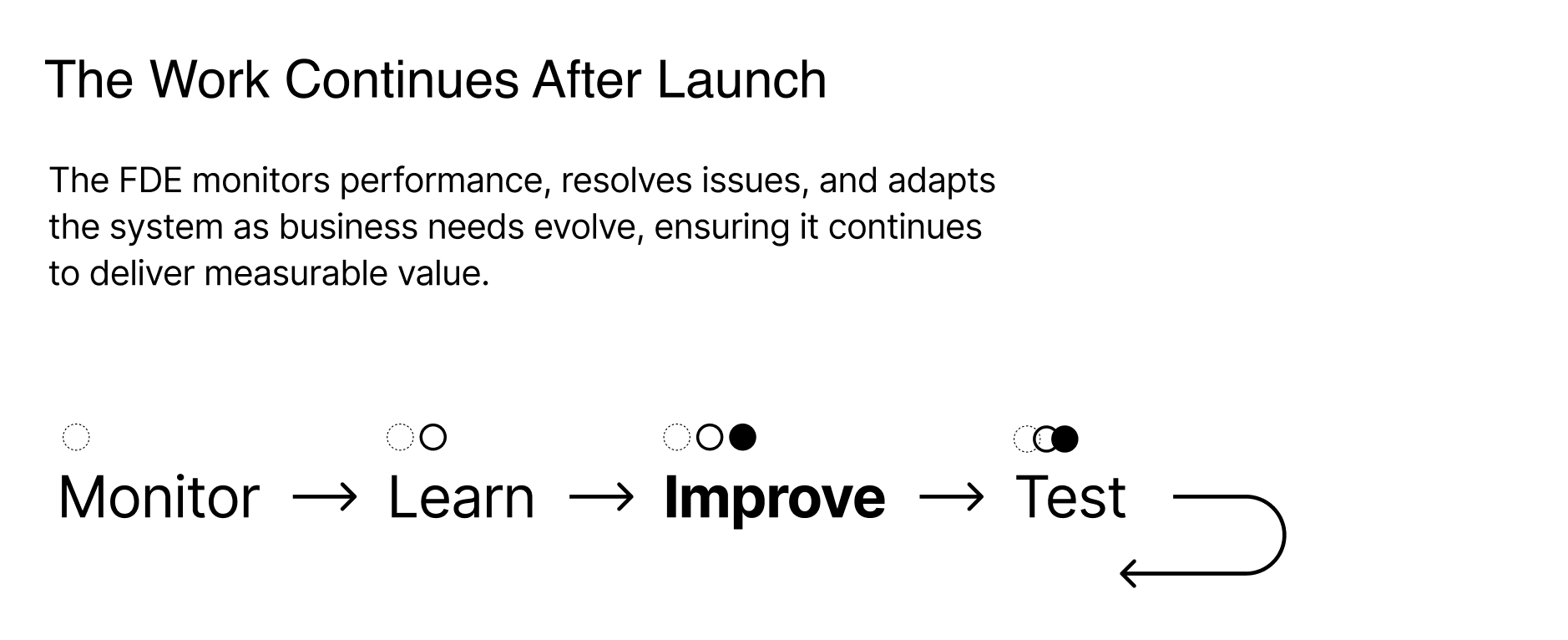
The FDE’s responsibility continues as the system, the team, and the business evolve.
Putting AI to Work in Your Business
The starting point is one workflow where an improvement would make a meaningful difference.
It could be helping patients book appointments sooner, reducing repetitive paperwork, or giving managers faster access to information.
At Chelsea Labs, we work alongside your team to understand how the work happens and identify where AI can help. We build and deploy the solution, then measure whether it improves results.
Talk to a Chelsea Labs AI Strategist about where AI can make a measurable difference in your business.